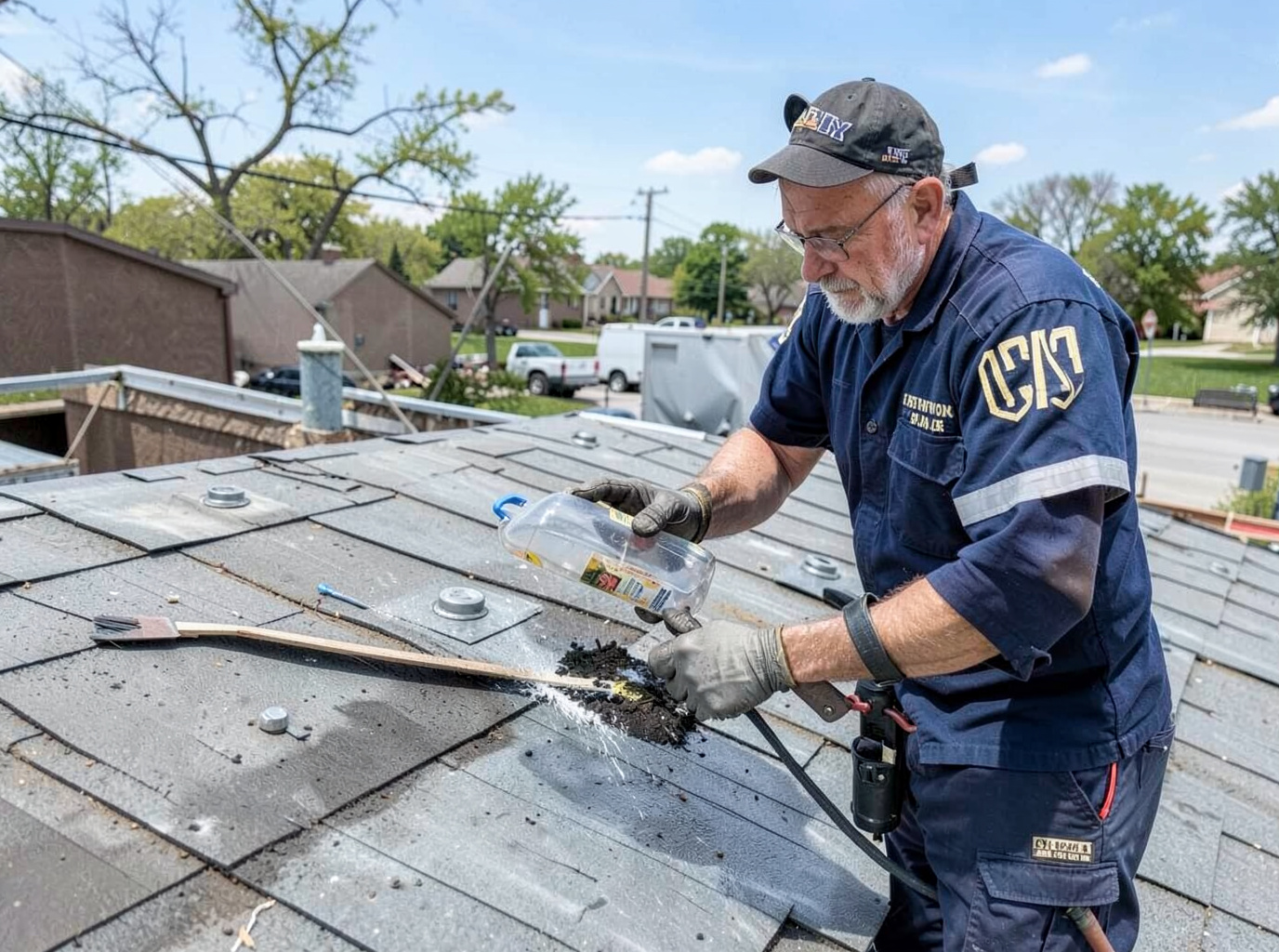
Kenosha winters bring repeated freeze-thaw cycles that push ice under shingles and force water into attics, especially on the north-facing slopes of pre-1960 homes in Lincoln Park and Allendale. When a call comes in after midnight, the first step is locating the active entry point without creating new damage, then installing a temporary seal that holds until daylight allows a permanent fix. Cold temperatures make many sealants brittle, so crews carry cold-weather formulations and keep tarps weighted against lake-effect winds off the harbor.
Summer thunderstorms drop heavy rain in short bursts, overwhelming valleys and step flashing on homes near Bradford Beach and the Kenosha Public Museum. Leaks here often trace to deteriorated step flashing or clogged gutters rather than missing shingles. Technicians check both the roof plane and the attic insulation for hidden saturation before leaving, because trapped moisture in these humid months leads to mold within days.
Many two-story homes in Uptown and Bain Park have limited roof access that requires ladder staging on narrow side yards. Crews verify load paths on older rafters before stepping onto them, and they carry extra underlayment rolls sized for common 12-by-16-foot sections to avoid multiple supply runs during an active storm.
Kenosha County building code requires permits for any roof work that exceeds 25 percent of the surface, so emergency repairs focus on the leak path only and document the rest for later scheduling. This keeps the immediate response legal while giving homeowners a clear plan for full replacement once weather stabilizes.
Technician insight
In Kenosha, the thing that catches most people out with Emergency Roof Leak Repair (24/7) is how quickly ice dams form along the eaves of 1940s–1960s homes in Lincoln Park and Allendale once lake-effect snow sits for a week. Homeowners often try to chip at the ice themselves and create more openings; we focus on melting channels and sealing from above without disturbing the existing shingles.
Midnight Leak on a Two-Story in HarborSide
A HarborSide homeowner called after water appeared along a second-floor ceiling during a January thaw. The crew found ice pushing under the north-slope shingles of the 1952 home. They cut a melt channel, applied cold-weather underlayment strips, and secured a weighted tarp. No further ceiling damage occurred and the permanent repair was completed the following week once temperatures stabilized.
Emergency Roof Leak Repair (24/7) Services We Offer
✓Ice Dam Leak Response
Remove ice dams and seal active water intrusion points on homes in Downtown Kenosha and Roosevelt without damaging shingles during freeze-thaw cycles.
✓Storm Damage Tarping
Install weighted, wind-rated tarps over wind-lifted sections near the Kenosha Harbor to prevent further rain entry until permanent repairs can be scheduled.
✓Flashing and Valley Leak Repair
Replace corroded step flashing and valley metal on older Uptown and Allendale roofs where summer downpours commonly bypass deteriorated seals.
✓Skylight and Chimney Leak Sealing
Re-seal skylight curbs and chimney cricket flashing on Lincoln Park and Bain Park homes where ice and wind-driven rain create persistent entry points.
✓Attic Water Intrusion Assessment
Trace leak paths from roof deck to ceiling in humid summer conditions and document saturated insulation for Kenosha homeowners before mold sets in.
Emergency Roof Leak Repair (24/7) Cost in Kenosha, WI
| Service | Typical Range | What Affects It |
|---|---|---|
| After-hours dispatch fee | $125–$225 | Higher on holidays or during widespread storm events |
| Temporary tarp and seal | $350–$650 | Varies with roof pitch and number of stories |
| Ice dam removal and seal | $450–$850 | Depends on extent of dam and access |
| Flashing repair add-on | $200–$450 | Per affected valley or chimney cricket |
Ranges are typical for Kenosha, WI and confirmed with an exact written quote before any work starts.
How it works
- 1
Immediate Dispatch and Safety Check
Technician confirms location in Kenosha neighborhoods and verifies safe ladder access before arriving on site.
- 2
Active Leak Location
Interior and exterior inspection identifies the water path, noting ice, wind damage, or flashing failure common in local housing stock.
- 3
Temporary Seal Installation
Apply cold-weather compatible materials and secure tarping to stop water entry until conditions allow permanent repair.
- 4
Documentation and Follow-Up Plan
Provide written scope and photos for permit compliance and schedule permanent work once weather permits.
Pricing
After-hours emergency calls carry a dispatch fee; final cost depends on roof height, leak location, and material needs.